


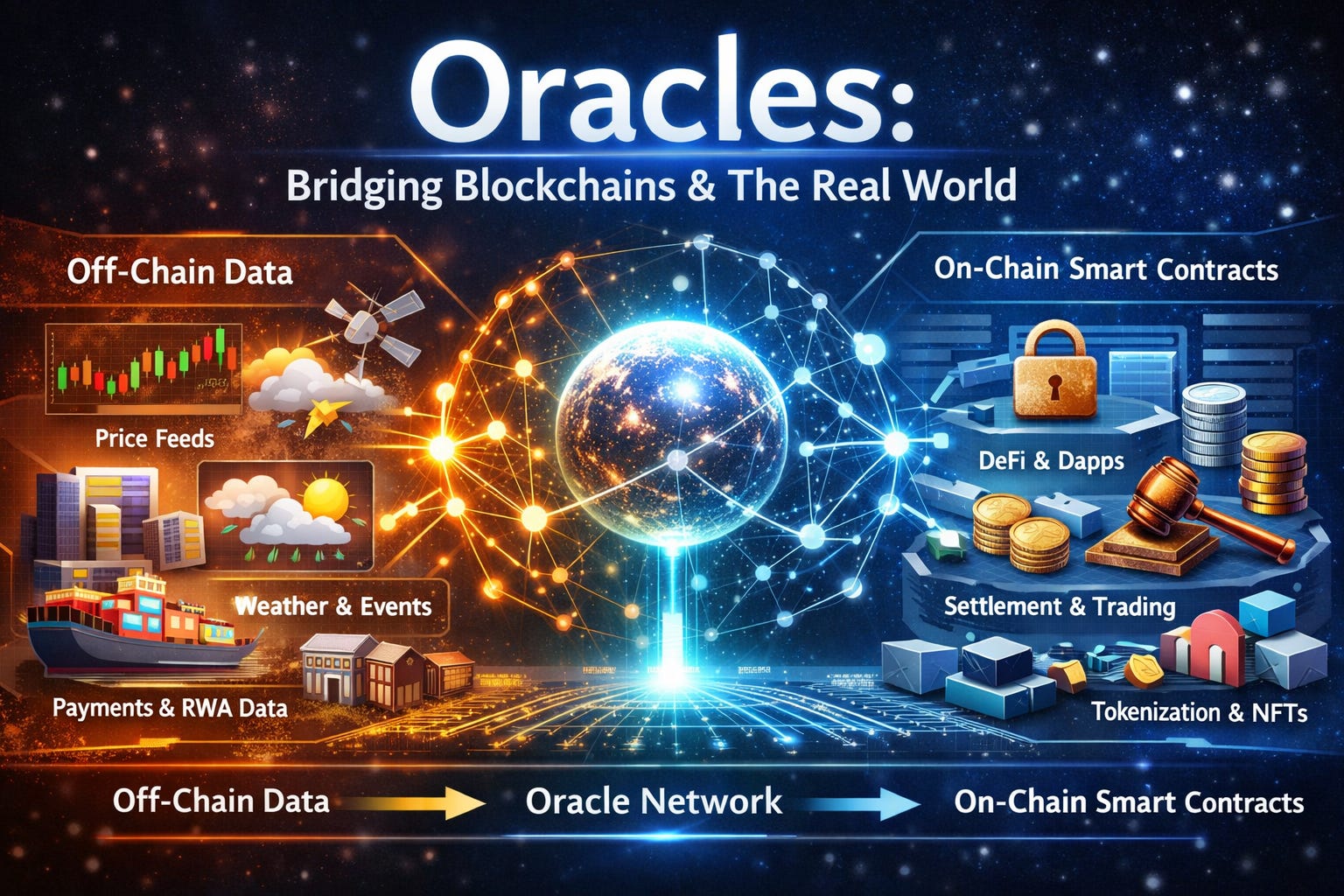
Blockchains are excellent at one thing: maintaining an internal, self-consistent record of state.
They are terrible at everything else.
A blockchain cannot see prices, interest rates, weather, election results, shipment arrivals, or corporate actions on its own. It cannot query a database, read a website, or observe the physical world. By design, it is closed.
This creates a fundamental constraint that sits underneath nearly every “real-world” crypto narrative:
Smart contracts can only react to information that exists on-chain.
Oracles exist to solve this problem.
This article explains what oracles are, how they work, why they matter, and why their existence complicates many common investment assumptions—especially around token value and infrastructure economics.
The Oracle Problem
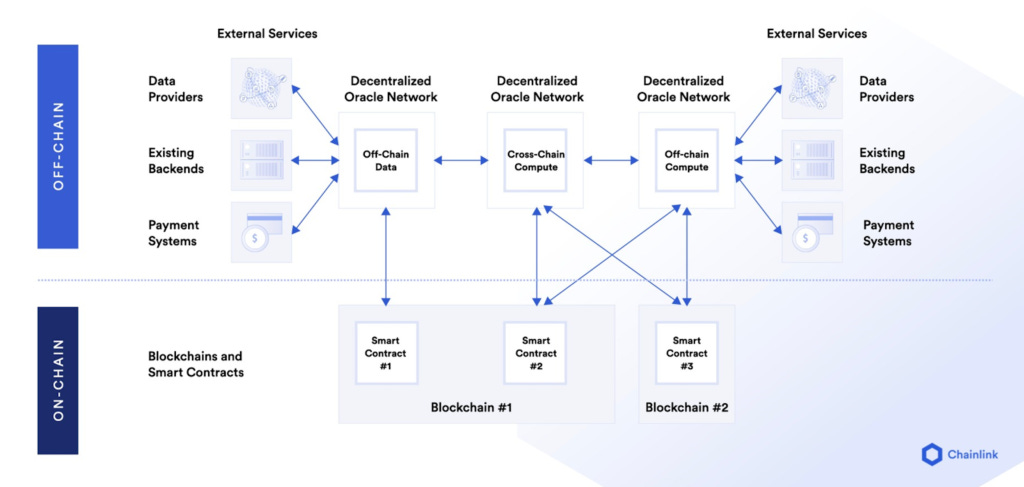
Smart contracts are deterministic programs. Every node in the network must arrive at the same result when executing them.
That requirement creates a problem the moment a contract depends on external data.
If one node reads “ETH = $2,300” and another reads “ETH = $2,295,” consensus breaks. The chain cannot agree on the outcome.
So blockchains intentionally do not fetch outside information themselves.
Instead, they rely on a specialized layer that brings external data into the chain in a standardized, verifiable way.
That layer is the oracle.
What Is an Oracle?
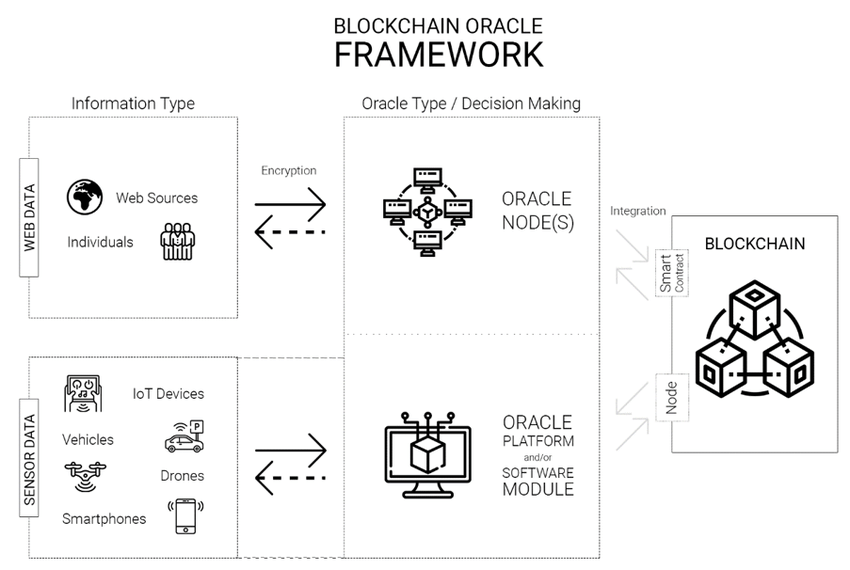
An oracle is a mechanism that delivers off-chain data to on-chain smart contracts.
In practice, this usually means:
Price feeds (crypto, equities, FX, commodities)
Interest rates and yield curves
Asset reference data
Event outcomes (elections, sports, defaults)
Proofs of off-chain activity (payments, shipments, identity attestations)
Oracles act as bridges between two worlds:
The external world where information originates
The blockchain where execution and settlement occur
Without oracles, most decentralized finance (DeFi), tokenized assets, prediction markets, and on-chain derivatives simply do not function.
How Oracles Work (Conceptually)
While implementations vary, most oracle systems follow a similar structure:
Data sourcing
Off-chain data is pulled from one or more sources (exchanges, APIs, databases, data providers).Aggregation and validation
Multiple independent nodes report values, which are aggregated to reduce errors, manipulation, or outages.On-chain delivery
The final value is written on-chain, where smart contracts can read it.Incentives and penalties
Nodes are paid for accurate reporting and penalized for malicious or faulty behavior.
The goal is not perfection. It is acceptable reliability under adversarial conditions.
This is harder than it sounds.
Why Oracles Are Systemically Important
Once you notice oracles, you see them everywhere.
They sit underneath:
Lending and borrowing protocols
Stablecoins and synthetic assets
Perpetual futures and options
Prediction markets
Tokenized treasuries and real-world assets
Automated liquidation systems
Cross-chain bridges and messaging
If an oracle fails, the application built on top of it often fails catastrophically.
Historically, many of the largest DeFi losses were not smart contract bugs—but oracle failures:
Bad price data
Thin liquidity references
Manipulated feeds
Latency during volatile markets
This makes oracles one of the most critical—and least visible—layers in the stack.
Centralized vs Decentralized Oracles
Early systems often relied on centralized data providers. This was simple but fragile.
Decentralized oracle networks emerged to reduce:
Single points of failure
Manipulation risk
Censorship risk
Vendor dependency
In these systems, many independent operators provide data, and the network aggregates their responses.
Chainlink is the most well-known example of this model, but the broader category matters more than any individual implementation.
The tradeoff is complexity:
More participants
More assumptions
More coordination
More surface area for incentives to break
Decentralization improves resilience—but it does not eliminate risk.
Oracles and Real-World Asset Tokenization
Real-world asset (RWA) tokenization depends on oracles more than almost any other narrative.

Tokenized treasuries, credit, real estate, or commodities require:
Price verification
Interest accrual data
Corporate actions
Maturity events
Compliance state
Custodian attestations
None of this information originates on-chain.
This means RWA tokenization is not just a blockchain problem. It is a data integrity and trust-minimization problem.
Oracles quietly become the choke point:
If the data feed is trusted, the system works.
If it is not, on-chain settlement is meaningless.
This is one reason traditional institutions remain cautious. They are not allergic to blockchains—they are allergic to unverifiable data dependencies.
Oracles as Infrastructure, Not Products
This is where investor intuition often breaks.
Oracles feel valuable. They are necessary. They are everywhere.
But necessity does not automatically translate to value capture.
Historically, infrastructure layers tend to:
Be competed down on price
Become standardized
Be absorbed into larger systems
Capture less upside than end-user applications
The internet runs on protocols that won completely—and monetized poorly.
This does not mean oracle networks cannot be profitable or useful. It means their economics may resemble utilities, not hypergrowth platforms.
Understanding this distinction matters when evaluating:
Token design
Fee models
Long-term returns
Competitive dynamics
Oracles and the “Embedded Token” Assumption
A common assumption in crypto is:
“If the system is used, the token must accrue value.”
Oracles challenge this assumption.
A network can:
Deliver accurate data
Secure billions in value
Become industry-standard
…while still struggling to translate usage into token appreciation in the way investors expect.
This does not make the system a failure. It makes it infrastructure.
Investors need to separate:
System importance
Revenue generation
Token value capture
They are not the same thing.
Read more below:

Why Oracles Still Matter (Even If the Token Doesn’t Moon)
Despite all of this, oracles are unavoidable.
Any system that claims to interact with the real world must answer a basic question:
Where does truth come from?
Oracles are the answer crypto has settled on.
They are not glamorous. They are not consumer-facing. They rarely make headlines.
But without them:
DeFi collapses
RWAs stall
Prediction markets fail
Automation breaks
They are the plumbing.
And like most plumbing, you only notice it when it stops working.
Closing Thought
Oracles sit at an uncomfortable intersection:
Technically essential
Economically subtle
Easy to misunderstand
Hard to value
They force a reckoning with a broader theme in crypto and markets:
Not all critical systems are designed to make investors rich.
Some are designed simply to make everything else possible.
And understanding which is which is increasingly the real edge.