


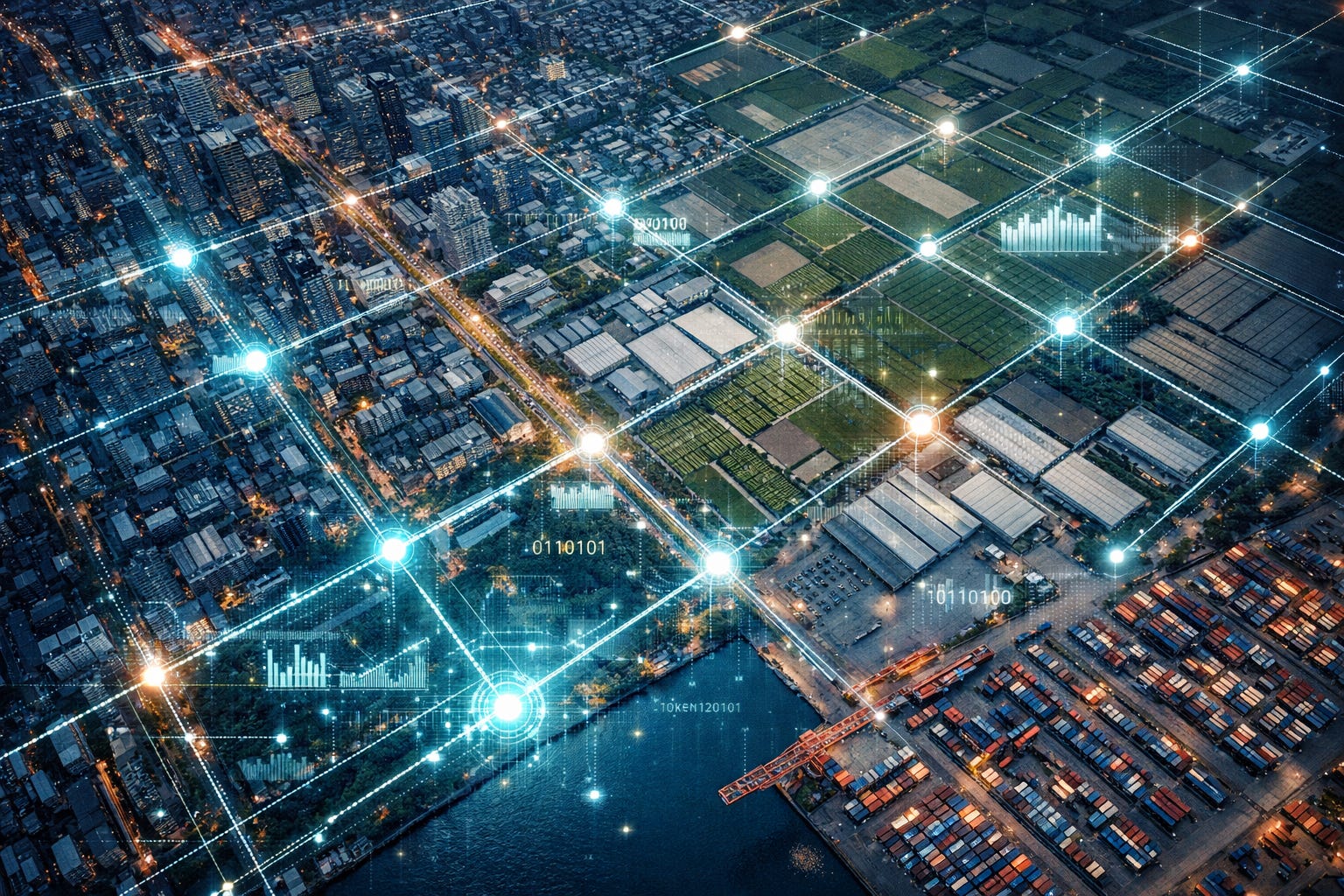
Real-world asset (RWA) tokenization is often described as “putting assets on the blockchain.”
That description is technically correct — and deeply insufficient.
To actually understand RWA tokenization, you need to understand:
what problems it solves
what exactly is being tokenized
how legal and technical layers interact
why finance comes first
and why the term “real-world assets” ultimately points beyond money
What Problem Is Tokenization Solving?
Traditional finance works, but it works slowly, expensively, and opaquely.
Some baseline realities:
Settlement can take days
Capital is locked during settlement
Collateral is siloed across institutions
Reconciliation requires massive back-office overhead
Cross-border transfers are costly and error-prone
These frictions are mostly invisible to retail participants. They are very visible to institutions.
RWA tokenization exists to solve coordination, settlement, and legibility problems — not to invent new assets.
What Is Real-World Asset Tokenization?
Real-world asset tokenization is the process of creating an on-chain representation of a claim on something that exists off-chain.
That “something” can be:
a financial instrument
a physical asset
a productive resource
or a legally defined right tied to real activity
The token does not create value.
It represents a claim, entitlement, or exposure that already exists.
A useful analogy:
Tokenization is to assets what email was to documents.
The document did not change. The transmission did.
What Exactly Gets Tokenized?
This is where most beginners get confused. There are three distinct things that can be tokenized.
1. Ownership or Beneficial Claims
A token represents ownership or economic interest.
Examples:
Shares in a real estate vehicle
Interests in a private credit pool
Fund shares or trust interests
This already exists off-chain. The token is simply the representation.
2. Cash Flows
A token represents the right to receive income.
Examples:
Interest from treasuries or bonds
Coupon payments
Rental income
Common in private credit and yield-bearing structures.
3. Exposure (Not Ownership)
A token provides price exposure without legal ownership.
Examples:
Synthetic commodity exposure
Structured products
Index-linked instruments
Many RWA tokens today fall into this category.
The Legal Layer (Non-Optional)
No matter how advanced the technology, RWA tokenization lives and dies by legal enforceability.
Every serious RWA structure answers:
What does the token legally represent?
Who holds the underlying asset?
What jurisdiction governs disputes?
What happens if the issuer fails?
How are tokenholders protected?
Blockchains do not replace courts.
They interface with them.
This is why:
early RWA systems are permissioned
institutions move slowly
“fully decentralized RWAs” should be evaluated carefully
The Technical Stack (Simplified)
A functional RWA system looks like this:
Asset Layer
The real-world asset exists off-chain:
bonds in custody
loans in a legal vehicle
land held by an SPV
Legal Wrapper
A trust, fund, or corporate structure defines rights and obligations.
This wrapper is the true source of value.
Token Layer
Tokens represent claims defined by the legal wrapper.
The token is not the asset.
The token is a pointer to the legal system.
Settlement Layer
A blockchain records ownership and transfers:
faster settlement
fewer intermediaries
programmable compliance
Data & Oracle Layer
External data feeds update the system:
interest payments
NAV updates
confirmations
corporate actions
Without reliable data, tokenization fails.
Real-World Assets Means More Than Finance
Despite common usage, “real-world assets” does not only mean bonds and treasuries.
It means scarce, measurable, economically useful things in the physical world.
Financial assets come first because they are already abstract and standardized — not because they are the end state.
Categories of Real-World Assets
1. Land and Property
Examples:
residential and commercial real estate
farmland
mineral rights
long-term land leases
Tokenization here is about:
fractional economic rights
standardized ownership interests
programmable revenue distribution
The land does not move.
The claims do.
2. Infrastructure and Logistics
Examples:
ports and terminals
warehouses
energy grids
transportation corridors
These assets already generate predictable cash flows. Tokenization allows:
modular ownership
transparent revenue allocation
integration with financing and insurance
Infrastructure is already modular. Tokenization makes it legible.
3. Productive Physical Assets
Examples:
industrial machinery
vehicle fleets
agricultural equipment
Tokens may represent:
usage rights
revenue participation
maintenance obligations
depreciation tracking
This blurs ownership and service models — by accounting, not ideology.
4. Commodities and Natural Resources
Examples:
oil and gas
metals
agricultural goods
water rights
Tokenization improves:
tracking
settlement
collateralization
Physical delivery constraints remain. The market around them becomes programmable.
5. Intangible-but-Real Assets
Examples:
carbon credits
renewable energy certificates
emissions allowances
royalty streams
Here, tokenization improves:
standardization
verification
auditability
Credibility matters more than speed.
Why Institutions Care More Than Retail
Institutions care about balance-sheet efficiency, not narratives.
Tokenization enables:
near-instant settlement
reduced capital lock-up
mobile collateral
automated compliance
lower operational costs
These gains compound at scale.
For a retail investor, saving two days doesn’t matter.
For a bank moving billions, it does.
What Actually Changes Once Assets Are Tokenized
This is the real shift.
Settlement becomes continuous
Markets move toward 24/7 logic.Collateral becomes mobile
Assets can be reused programmatically.Financial products become modular
Assets can be composed like software.Boundaries blur
TradFi and crypto converge structurally, not ideologically.
What Tokenization Does Not Do
It does not remove credit risk
It does not remove legal risk
It does not guarantee liquidity
It does not democratize access by default
Bad assets remain bad assets.
Common Beginner Misconceptions
“If systems succeed, tokens must rise.”
Infrastructure success ≠ value capture.“This replaces banks.”
It retools them.“Blockchain removes trust.”
It relocates trust.“The real world becomes virtual.”
Physical constraints remain.
Timeline Reality
RWA tokenization follows an infrastructure curve:
Institutional pilots
Permissioned environments
Narrow asset classes
Gradual standardization
Invisible normalization
This is a decade-scale shift, not a cycle trade.
The Deeper Implication: Making the World Legible
At its deepest level, RWA tokenization is not about money.
It is about making the physical world legible to digital systems.
Tokenization:
measures
standardizes
abstracts
encodes
…things that were previously managed by paperwork, trust, and slow coordination.
It does not replace reality.
It creates a map of it.
And maps change power, incentives, and coordination.
Bottom Line
Real-world asset tokenization is not a revolution.
It is an upgrade.
Finance is first because it is easiest — not because it is final.
Over time, more of the physical world becomes legible to digital coordination systems.
Capital moves faster around reality.
Reality itself remains stubbornly real.
And once this process is complete, the old system will feel inexplicably inefficient in hindsight.