



Real-world asset (RWA) tokenization is increasingly framed as inevitable.
Treasuries, bonds, real estate, private credit — all migrating on-chain. Settlement becomes faster. Custody becomes programmable. Compliance becomes automated.
Most investors implicitly accept a second assumption along with this story:
If the system succeeds, the token succeeds.
This assumption deserves scrutiny. It may be wrong.

Infrastructure Is Not Equity
Most RWA protocols function as infrastructure, not businesses in the traditional sense. They provide rails: data delivery, settlement coordination, verification, and orchestration. These rails are necessary — but necessity alone does not guarantee value accrual.
History is instructive here.
TCP/IP won.
HTTP won.
SMTP won.
None of them produced a native asset that captured the economic upside of global adoption.
Crypto advocates often argue that blockchains are different because “the token is embedded.” Sometimes that is true. Often it is not true in the way investors assume.
The Oracle Example (A Category Issue, Not a Company Critique)
Consider oracle networks as a category. The logic is intuitive:
RWA tokenization requires off-chain data
Off-chain data requires oracles
Therefore oracle tokens should benefit from RWA growth
The gap in this logic is value transmission.
Several questions are usually left unexamined:
Is the token required for every transaction, or only for staking and security?
Does higher transaction volume increase token demand linearly, marginally, or not at all?
Can enterprise users abstract the token away entirely?
Are fees structurally designed to compress over time?
If a system becomes highly successful, pressure builds to make it cheap, stable, and invisible. That is the definition of good infrastructure. It is not automatically the definition of a good speculative asset.
Abstraction Is the Enemy of Speculation
Institutions do not want exposure to volatile tokens.
They want:
Predictable costs
Regulatory clarity
Minimal balance-sheet volatility
Accounting simplicity
If a protocol succeeds in onboarding banks, asset managers, or governments, the incentive is to hide the token behind service layers, fixed-fee contracts, or enterprise wrappers. The more “real” the assets become, the less tolerance there is for a volatile meta-asset underneath.
Paradoxically, mass adoption often reduces token visibility rather than amplifying it.
Activity Does Not Guarantee Value Capture
A common argument is that once trillions of dollars are tokenized, associated tokens must appreciate.
That only holds if several conditions are met simultaneously:
Fees are paid in the token
Fees scale meaningfully with activity
Emissions do not offset demand
Value accrues to holders, not just operators
Many RWA-focused protocols fail at least one of these conditions by design.
In some systems, the token functions primarily as:
Governance
Staking collateral
Insurance against failure
These are valid roles. They are not the same as equity-like cash-flow participation.
What Success May Actually Look Like
There is a plausible future in which RWA tokenization works exactly as promised:
Governments issue on-chain debt
Funds settle instantly
Compliance is automated
Intermediation costs fall
And the associated tokens:
Trade sideways
Exhibit declining volatility
Behave like regulated utilities
This outcome would represent technological success — not investment failure. The problem is that many investors are positioned for exponential upside in systems structurally designed to become plumbing.
The Uncomfortable Conclusion
RWA tokenization can be real, massive, and transformative without making most associated tokens strong investments.
This does not imply that all tokens fail. It implies that selection criteria must evolve.
The relevant question is no longer:
“Does this protocol enable tokenization?”
It is:
“Where does economic value actually settle if the system succeeds?”
Most investors are still asking the first question.
That is why this trade remains widely misunderstood.
So How Do You Position to Capture the Value?
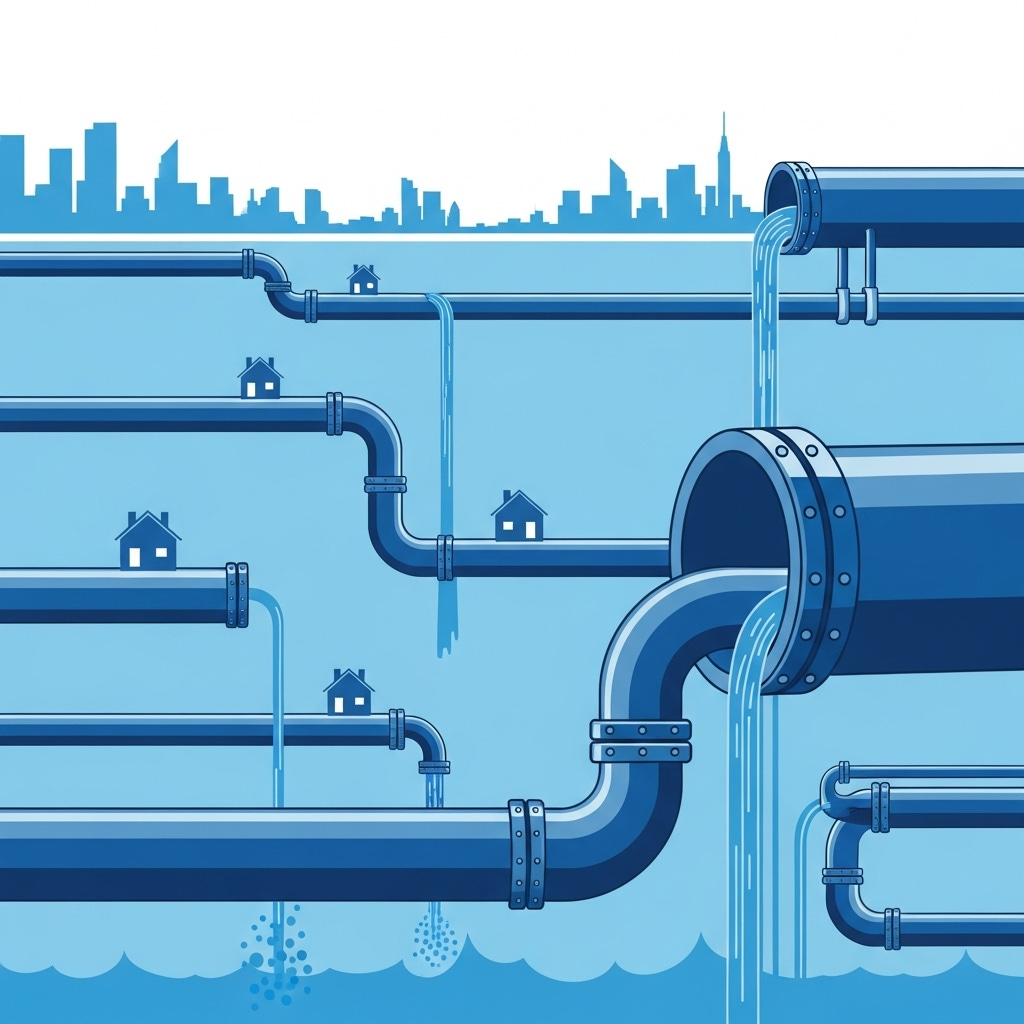
If tokenization is real but token capture is uncertain, positioning has to shift from ideology to structure.
The goal is not to “own the future,” but to identify where economic rents actually accumulate as systems mature.
1. Own the Balance Sheets, Not the Buzzwords
Historically, the most durable winners in financial infrastructure transitions are not the rails themselves, but the entities that:
Control distribution
Hold assets on balance sheet
Intermediate trust and regulation
In the RWA context, this often means:
Large asset managers
Custodians and administrators
Clearing, settlement, and compliance providers
These firms benefit whether tokenization happens via blockchain A, B, or C. They monetize adoption without needing to speculate on protocol design.
2. Look for Toll Collectors, Not Toolmakers
Tools get competed away. Tolls persist.
Protocols that capture value tend to:
Sit at unavoidable choke points
Be difficult to disintermediate
Scale pricing with volume, not hype
Most tokenized systems will compress fees over time. Positioning favors models where revenue scales with throughput and legal necessity, not optional usage.
3. Separate Adoption Risk From Price Risk
One of the most common mistakes is assuming that technological adoption and asset price appreciation move together.
They do not.
A protocol can succeed operationally while its token underperforms. Conversely, a token can perform well while real-world usage remains minimal.
Positioning improves when:
Adoption exposure is gained through operating companies
Token exposure is treated as asymmetric optionality, not core infrastructure allocation
This distinction matters for both portfolio construction and client communication.
4. Prefer Optionality Over Conviction
Early-stage infrastructure transitions reward flexibility.
Rather than concentrating on a single protocol narrative, positioning can emphasize:
Broad exposure to tokenization beneficiaries
Smaller, deliberate allocations to tokens with explicit value capture
Willingness to rotate as fee models and incentives evolve
Conviction is expensive when the rules are still being written.
5. Accept That Some Value Will Never Be Financialized
Not every technological gain becomes investable.
Faster settlement, lower costs, and reduced friction benefit the system as a whole, often at the expense of extractive margins. This is good for markets. It is not always good for investors seeking exponential upside.
Understanding this distinction prevents over-allocation to narratives that are structurally deflationary.
Reframing the Opportunity
Tokenization is best understood not as a single trade, but as a slow redistribution of value across the financial stack.
Some layers gain. Some layers commoditize. Some layers disappear.
Positioning well means staying honest about where you are placing capital:
In belief
In infrastructure
Or in cash-flow-generating intermediaries
The market is still debating whether tokenization will happen.
The more important debate is who gets paid if it does.