


As of August 2025, the CPI indicated that inflation had decreased to 2.9% year-over-year, down from over 9% in 2022.
We keep hearing that inflation is “cooling.” But the truth is most of it never really left. The official CPI only measures what is easy to track, not what actually lessens your buying power.
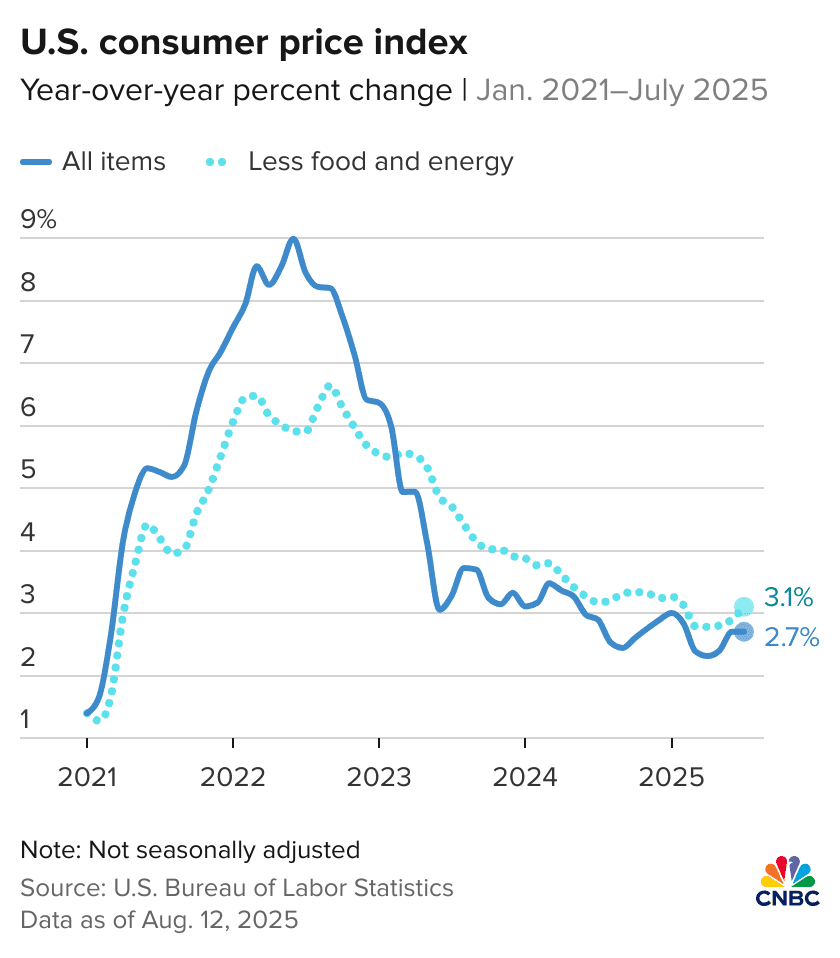
First, we need to understand the macro levers that affect inflation, and why CPI does not capture the whole story.
What Is Causing Inflation?
1. Fiscal Expansion
Government spending remains elevated post-COVID (infrastructure, defense, subsidies, social programs, etc.) all pushing fresh demand into the economy even when rates are high.
2. Tariffs and Trade Friction
Tariffs are direct cost-push inflation. Imported goods get pricier, domestic producers raise prices to match, and input costs ripple across manufacturing and retail.
3. Energy Prices
If oil or natural gas tick up (due to geopolitical tension or production limits), transport and production costs jump. Energy inflation bleeds into everything else.
4. Wage Stickiness
Tight labor markets mean wages stay high. Companies pass those costs along, and even if growth slows, wage inflation doesn’t unwind quickly.
5. Housing and Rent
Home shortages and high demand keep shelter inflation stubborn. This is one of the biggest pieces of CPI.
6. Corporate Pricing Power
Many firms learned during COVID that consumers tolerate higher prices. Even as costs stabilize, they don’t roll prices back. Margin preservation quietly fuels inflation persistence.
7. Monetary Lag
Rate hikes work on delay. The effects of earlier easing or excess liquidity can still move through the system long after the Fed stops printing or even tightens.
8. Supply Chain Resilience Spending
Onshoring, redundancy building, and “de-risking” supply chains sound stable but are expensive — a structural inflation source that’s here to stay.
Here’s What’s Really Happening:
Cheap imports masked inflation for years. Now, rising global costs are exposing the true price of dependency. That gave the illusion of stability, but it hollowed out domestic production and made us dependent on cheap foreign supply.
Now we’re importing inflation. As China’s labor and energy costs rise, and global trade slows, the same goods cost more. That’s not demand-driven—it’s structural. Raising rates can’t fix it.
The dollar is quietly shrinking. When money supply expands faster than productivity, each dollar buys less. Even if CPI says “3%,” real-world inflation (housing, healthcare, food) is far higher.
Asset prices adjust, not improve. Stocks, gold, Bitcoin, etc., they all rise when the measuring stick (the dollar) gets smaller.
You’re not necessarily getting richer; your money is just worth less.
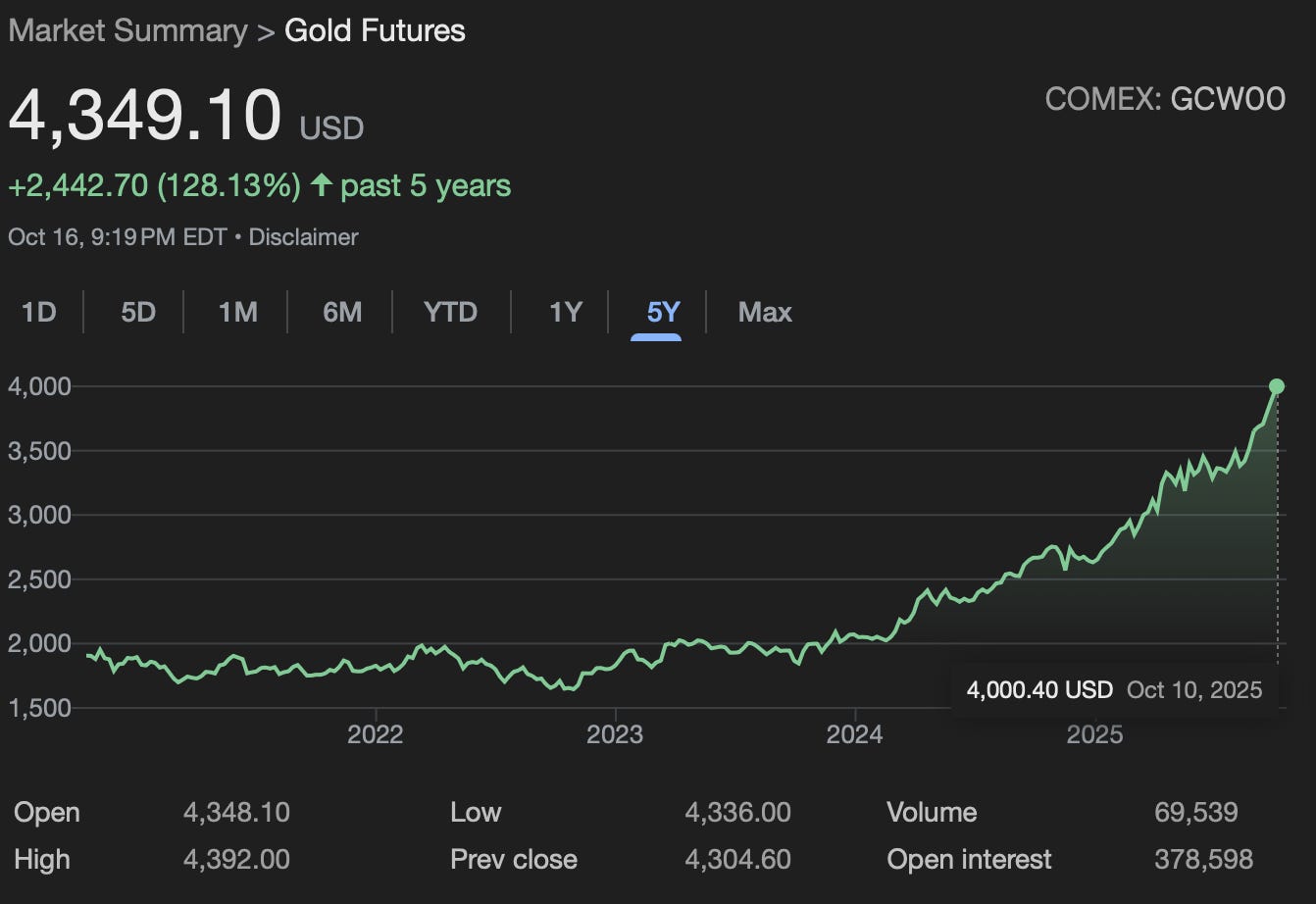
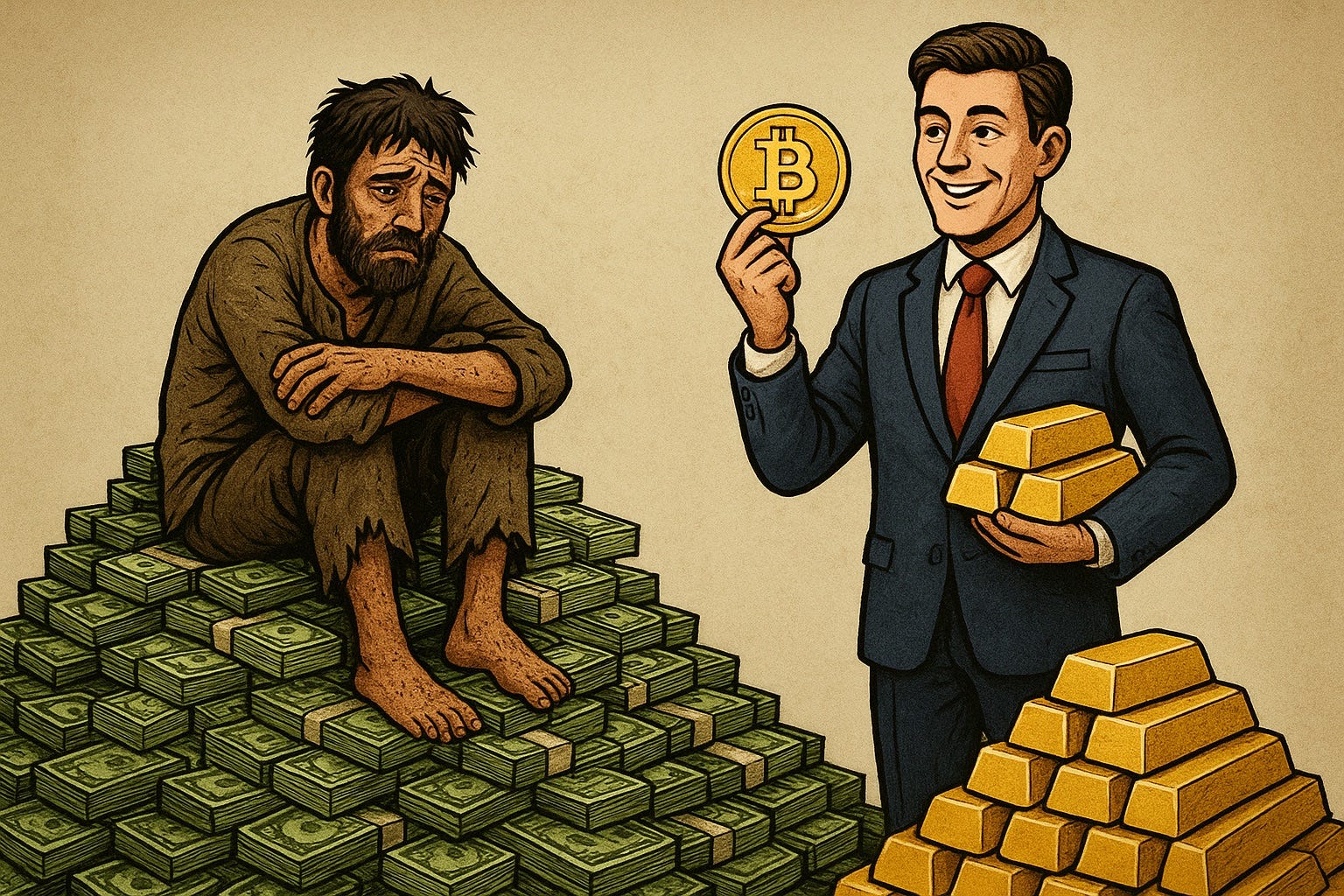
That’s why many investors hedge with scarce assets like gold (finite by nature) or Bitcoin (capped at 21 million). Both act as escape valves when the financial system inflates reality.
Rising prices don’t always mean growth. Sometimes they just reveal how much value has leaked from the money itself.
Now look at the price of gold in October 2025… The market already knows what the dollar is worth.