



For most of the last decade, crypto and traditional finance were treated as separate worlds. Different participants. Different rules. Different psychology. One was seen as speculative, chaotic, and fringe; the other as regulated, institutional, and slow-moving.
That separation is ending.
What we are witnessing now is not crypto “replacing” traditional markets, nor TradFi “taming” crypto. It is something more subtle and more consequential: a convergence into a single, continuous financial system—one that operates closer to 24/7, spreads volatility across asset classes, and forces investors to rethink assumptions that once felt permanent.
This shift has implications not just for portfolios, but for investor psychology, risk management, and even what it means to be “retail.”
From Parallel Systems to One Market
Historically, markets had clean boundaries:
Stocks traded during fixed hours.
Crypto traded continuously.
Volatility lived mostly in speculative corners.
Institutions moved slowly; retail reacted emotionally.
Those distinctions no longer hold.
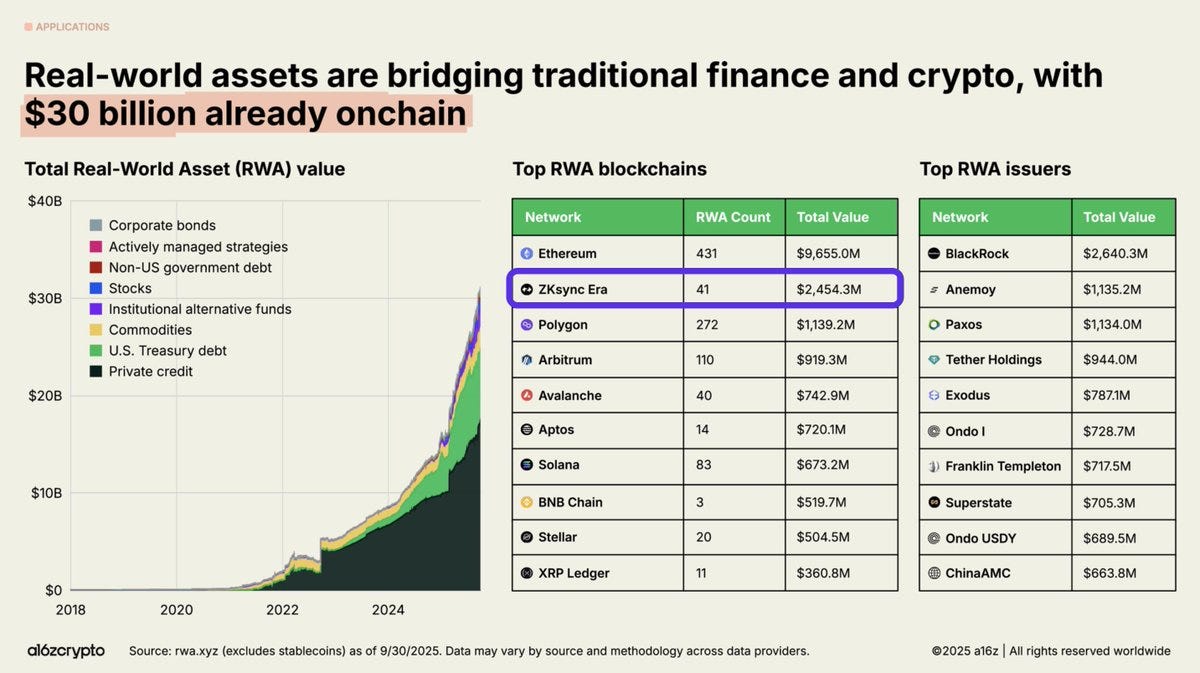
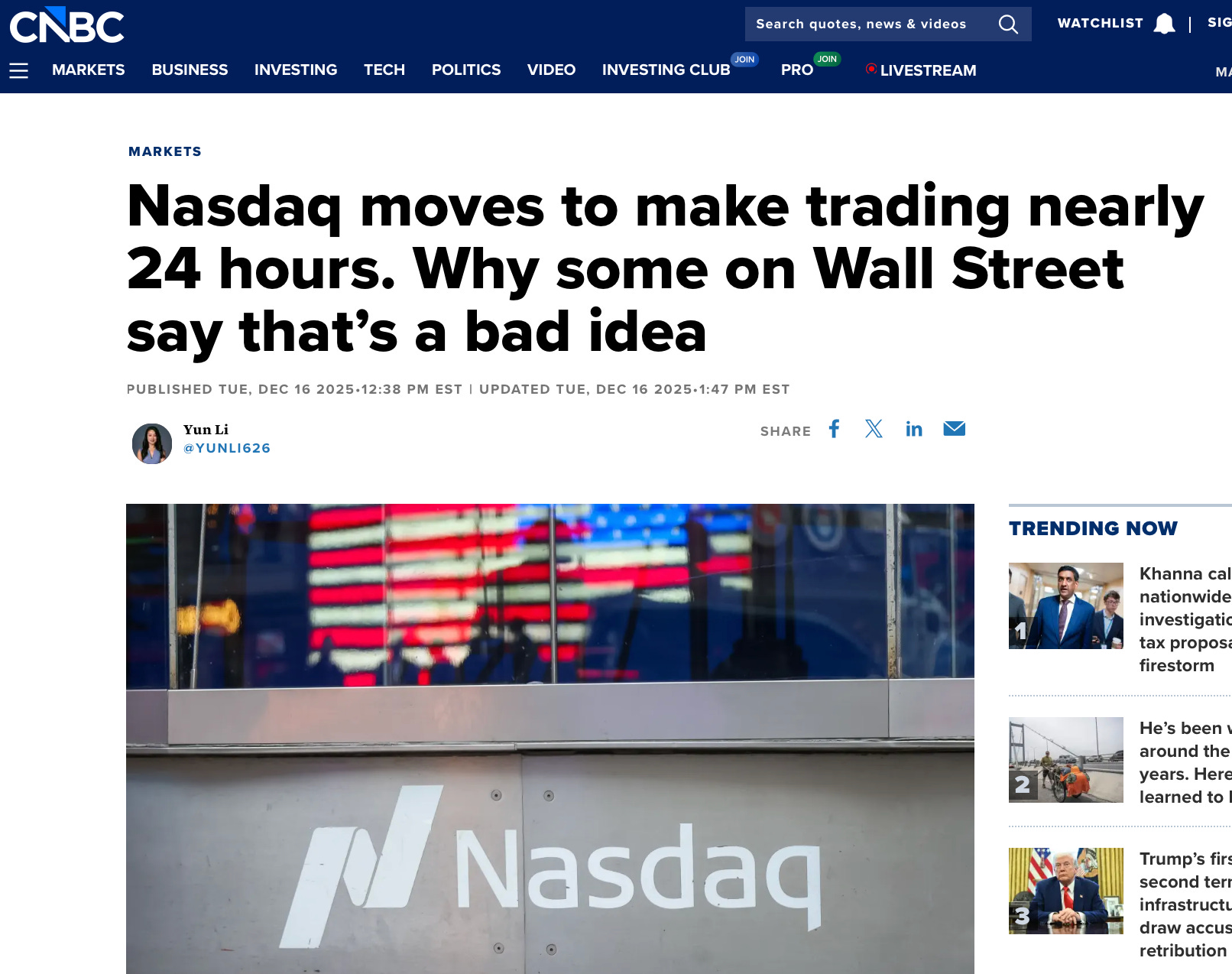
Crypto trades nonstop, and now traditional markets are moving in that direction through extended hours, tokenized equities, and faster settlement. Meanwhile, institutional capital has entered crypto via ETFs, custody solutions, and balance-sheet exposure. Liquidity flows increasingly respond to macro signals, not asset labels.
Bitcoin does not crash in isolation anymore. Neither do growth stocks. Risk-on and risk-off behavior now propagates across everything.
In practical terms: there is no longer a “crypto market” and a “stock market.” There is one risk market with different expressions.
The End of Old Truths
Many investing maxims were built for a slower world. They still sound wise, but they fail under modern conditions.
“Markets digest information overnight.”
Not anymore. Information is priced continuously. By the time the opening bell rings, the move may already be over—or already reversing.
“Retail is dumb money.”
Retail is no longer a single demographic. The middle-aged, long-only investor still exists—but they now coexist with a younger, hyper-online, leverage-aware cohort that trades narratives, volatility, and reflexivity.
“Volatility is isolated.”
Volatility now migrates. A liquidation cascade in crypto can tighten liquidity for small-cap equities. A bond market shock can ripple into meme coins. Correlation spikes when it matters most.
Old frameworks assumed separation. The new system punishes that assumption.
The New Retail Investor
The dominant retail archetype has changed.
The old model was the middle-aged family investor:
Long time horizon
Monthly contributions
Emotional attachment to “safe” assets
The new retail investor—especially Gen Z—is structurally different:
Comfortable with volatility
Raised on gamified interfaces
Willing to rotate aggressively
Narrative-driven rather than valuation-pure
This investor does not see a meaningful difference between trading Bitcoin, options, or micro-cap equities. They see opportunity surfaces. Risk is not avoided—it is managed through repetition.
Platforms like Robinhood and crypto-native exchanges trained this cohort to think in probabilities, momentum, and asymmetric payoff structures. That psychology is now bleeding into traditional markets.
Institutions are adapting faster than many realize.
What Changes for Traditional Markets
Traditional markets will not become “degenerate,” but they will become faster, more reflexive, and more sentiment-sensitive.
Expect:
Greater intraday volatility
Faster rotations between sectors
Increased influence of retail flow during stress events
Less patience for purely narrative-free fundamentals
This does not mean fundamentals no longer matter. It means they matter on compressed timelines. Valuation gaps close faster. Mispricings are shorter-lived. Conviction without adaptability becomes a liability.
What Changes for Crypto
Crypto, meanwhile, is losing some of its isolation premium.
Institutional involvement dampens certain extremes but introduces macro sensitivity. Crypto now reacts to:
Interest rate expectations
Dollar strength
Liquidity conditions
Regulatory signaling
Assets like Bitcoin increasingly behave like high-beta macro instruments rather than purely ideological ones. This does not kill the upside—but it changes when and why upside occurs.
The era of ignoring macro is over.
Positioning in the Converged System
So how does an investor adjust?
1. Think in regimes, not assets.
Ask: Are we in risk expansion or contraction? Liquidity abundance or scarcity? Assets respond after regimes shift, not before.
2. Shorten feedback loops.
Even long-term investors must monitor shorter-term signals. You do not need to trade constantly, but you must stay aware of narrative velocity.
3. Size volatility, don’t fear it.
Volatility is not noise—it is information. Position sizing now matters more than asset selection.
4. Accept partial exposure.
Binary thinking (“all in” vs. “all out”) is increasingly punished. Modular allocation—scaling in and out—fits the new market structure better.
5. Understand psychology as a factor.
Flows are driven by stories, not spreadsheets alone. Ignoring investor behavior is no longer conservative—it is blind.
The Bigger Picture
This convergence is not a phase. It is structural.
Technology compressed time. Social platforms compressed narratives. Capital followed both.
The investor who thrives going forward will not be the one who clings to old certainties, nor the one who chases every new trend. It will be the investor who understands that markets are becoming more continuous, more psychological, and more reflexive—and positions accordingly.
The game did not become easier.
But it did become more honest.
And for those willing to adapt, that honesty is an edge.